What Does Irrigation Pipe Repair Involve?
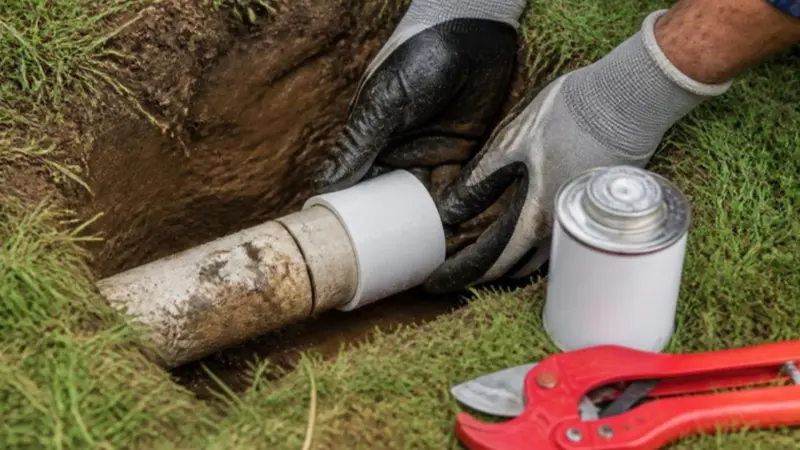
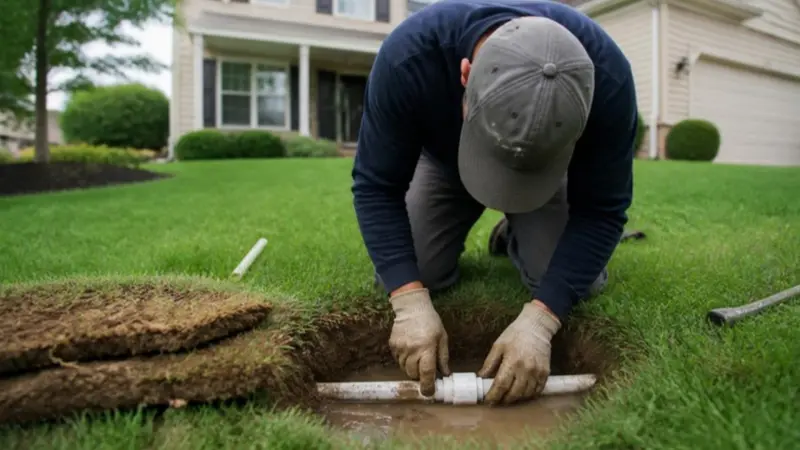
Irrigation pipe repair means exposing the damaged section of buried sprinkler pipe, cutting out the crack, split or failed fitting, and splicing in new pipe with repair couplings or fittings that match the pipe type. The line is flushed, the zone is pressurized and run to check for leaks, and the soil and sod are replaced.
It's the most common repair after a leak is found, and it's a core part of sprinkler leak repair services in Romeoville. The approach depends on which line failed and what it's made of.
Types of Irrigation Line Repairs
Lateral line crack repair
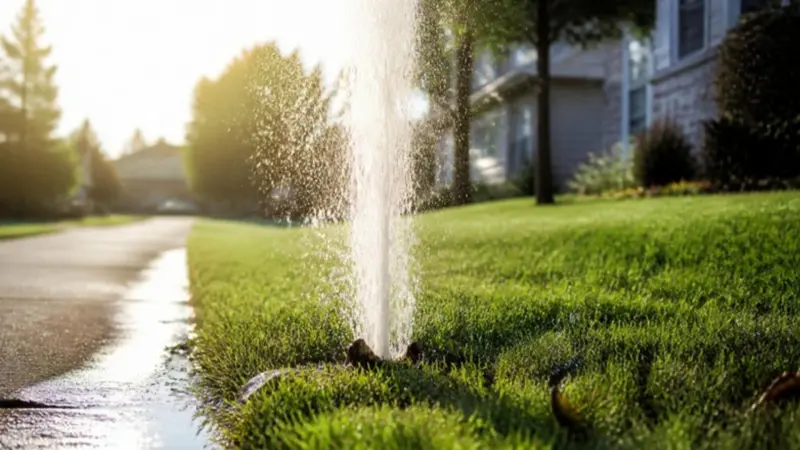
Lateral lines carry water from a zone valve to its heads and are pressurized only while that zone runs. A crack shows up as a soggy strip or weak heads on one zone. Most are fixed with a short cut-out and a slip or compression repair coupling.
Mainline pipe splice and replacement
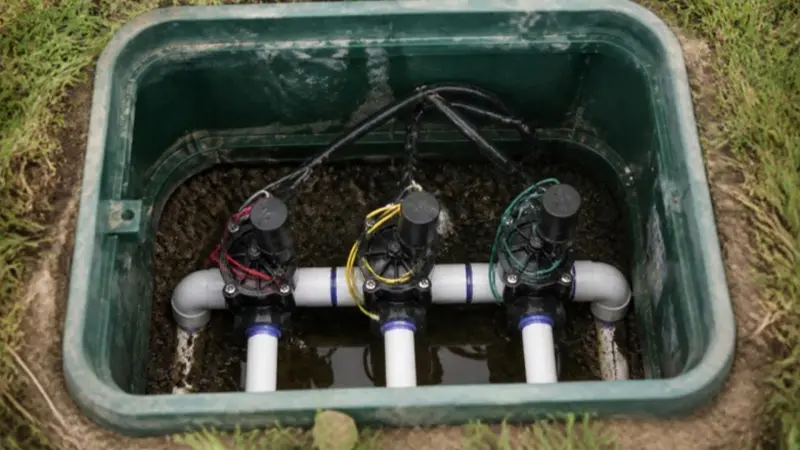
The mainline is under constant pressure from the supply to the valves, so a break runs 24 hours a day. Mainline repairs use pressure-rated pipe and fittings, and a longer run may be replaced if the pipe is brittle or repeatedly failing.
Underground poly pipe repair
Flexible polyethylene pipe is joined with barbed insert fittings and clamps. It commonly leaks where a clamp has loosened or a fitting has split. The fix is a new barbed coupling or tee with stainless clamps.
PVC pipe joint and fitting repair
Rigid PVC is solvent-welded. Joints that weren't fully primed and seated, or fittings stressed by settling or freezing, can crack. The failed fitting is cut out and replaced, allowing the new glue joints to cure before pressurizing.
Why Sprinkler Pipes Break
- Freezing. Water left in low spots after a weak fall blowout can split pipe and fittings over a northern Illinois winter. See how to winterize properly.
- Digging and aeration. Shovels, core aerators, fence-post augers and edging tools often hit shallow lines.
- Tree roots. Roots crowd, lift and crush pipe, and they grow toward the moisture of a small existing leak.
- Soil movement. Clay soils swell when wet and shrink when dry, stressing rigid joints over time.
- Pressure surges. Valves closing quickly, or high supply pressure, put stress on older fittings.
- Age and installation. Brittle PVC, mixed pipe types and poorly glued joints fail sooner.
The Repair Process, Step by Step
- Locate the break with zone-by-zone leak detection so the excavation is in the right place.
- Request a JULIE locate so gas, electric and cable lines are marked before digging.
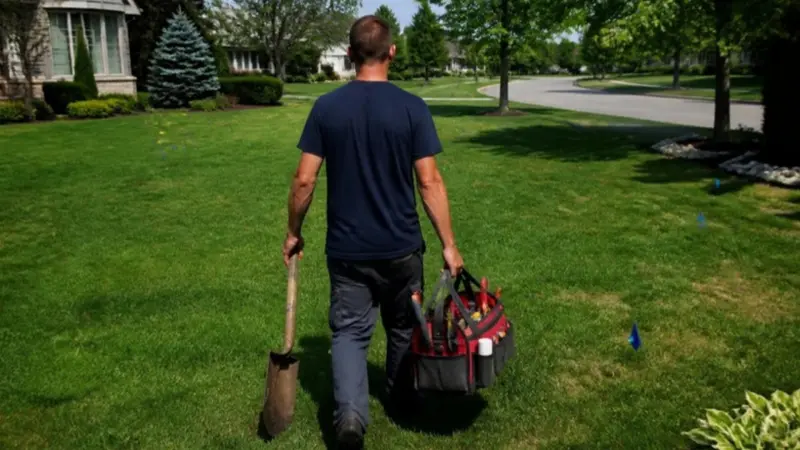
- Cut and set aside the sod, then dig a hole large enough to work on the pipe on both sides of the break.
- Cut out the damaged section and install the correct coupling, splice or replacement fittings for the pipe type.
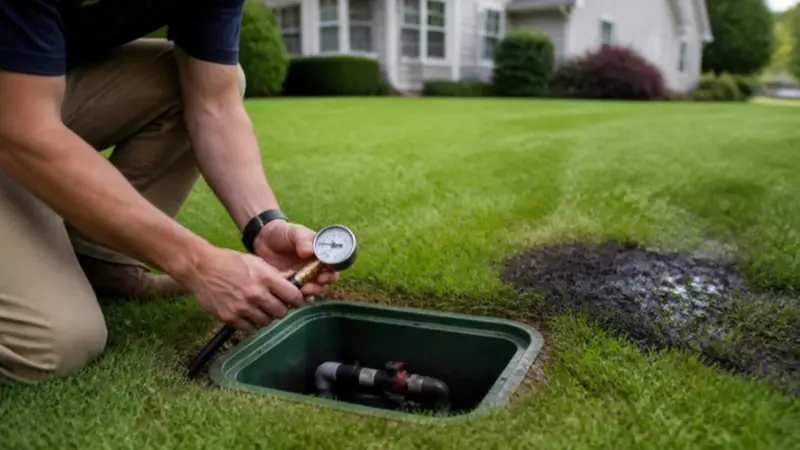
- Flush and pressure-test, running the zone (or pressurizing the mainline) to confirm there are no leaks.
- Backfill and compact the soil in layers so it doesn't settle, and put the sod back.
What Affects the Cost of a Line Repair
The price of a pipe repair depends on how long it takes to find the break, how deep and accessible it is, whether it's a lateral or the mainline, the pipe material, and whether more than one break is found. Breaks under concrete, pavers or tree roots take the most labor, and sometimes rerouting around the obstacle costs less than repairing in place. Ask the provider to show you the break and quote before they start.
Repeated breaks on the same line, or a system where much of the pipe is brittle, may be worth replacing in sections. If a leak turns out to be at a valve rather than the pipe, see sprinkler valve repair. Line repairs are available across Romeoville, including Weslake and Fieldstone and Mistwood. To see how pipe repair fits with every other service, visit our overview of leak repair for Romeoville sprinkler systems.