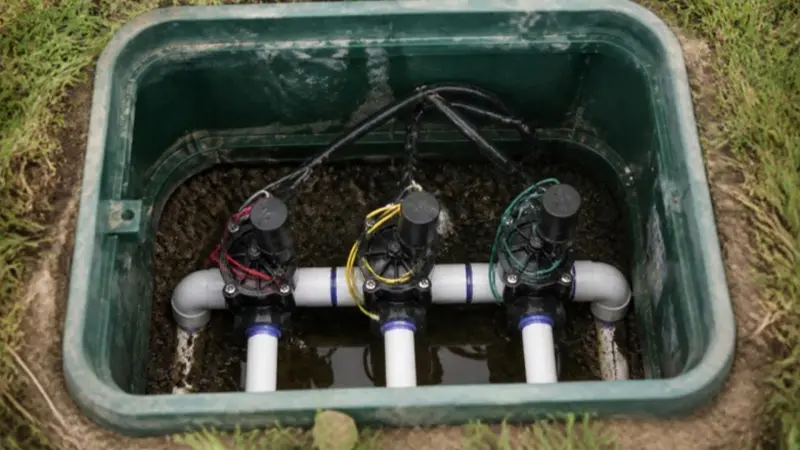
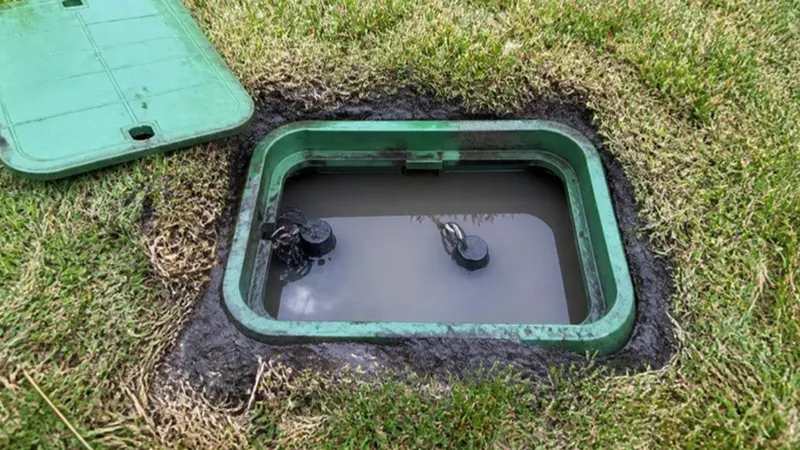
The Short Answer
If the box fills up again when the sprinklers are off and it hasn't rained, you almost certainly have a leak at or near the valves: a weeping valve, a cracked fitting on the manifold, or a loose solenoid or bonnet. If it only holds water after rain or right after a watering cycle and slowly drains, it's usually groundwater or poor drainage, which is common in the heavy clay soils around Romeoville and isn't always a problem.
A flooded box is one of the most common reasons homeowners call about sprinkler valve repair. For every other repair and how our call process works, see irrigation leak repair in Romeoville, IL.
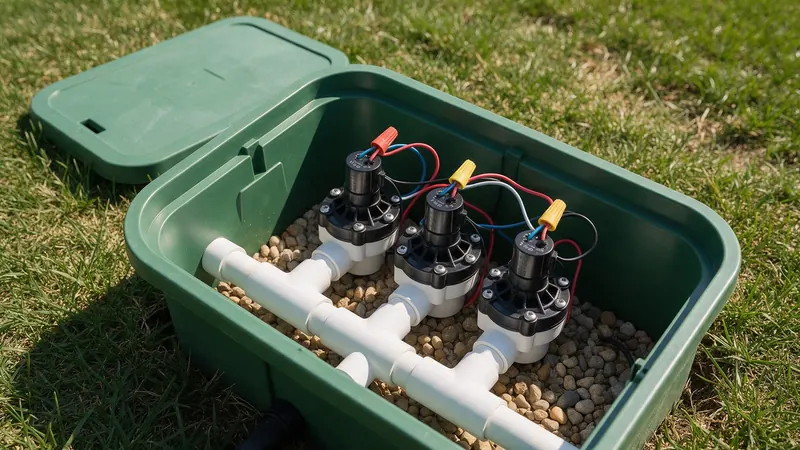
The Bail-and-Watch Test
You don't need tools beyond a cup, a sponge or a small wet/dry vacuum. Do this on a dry day, with the controller off.
- Turn the controller off (or set it to "off" or "rain delay") so no zone starts while you're watching.
- Bail the box out until you can see the bottom, the valve bodies and the pipe connections.
- Wait 30 to 60 minutes and look again. Note how fast the water returns and where it comes from: a fitting, the top of a valve, or the soil walls and floor of the box.
- Close the irrigation shutoff (usually in the basement where the sprinkler line leaves the house plumbing), bail again and wait. If the box stays dry now, the water was coming from the pressurized system, not the ground.
Write down what you saw. It tells a provider exactly where to start and can shorten the visit.
What You See and What It Usually Means
Refills with the system off
Water is escaping from the always-pressurized side: the inlet of a valve, a manifold fitting or the mainline entering the box. It leaks 24/7 and shows up on your water bill.
Water bubbles from a fitting
A cracked tee, elbow or glued joint on the manifold. Older PVC and freeze damage from a missed winterization are the usual causes.
Water around the solenoid or valve top
A loose or cracked solenoid, a worn bonnet gasket or a torn diaphragm. Often the same valve also weeps or won't close fully.
Fills only while a zone runs
A leak on the outlet side of a valve, which is only pressurized during that zone's cycle. Run each zone briefly to find which one fills the box.
Flooded box and a zone that won't stop
A valve stuck open. Close the irrigation shutoff, then see our guide on a sprinkler zone that won't turn off.
Only after rain, drains in a day or two
Surface water and groundwater collecting in a low box. Clay soil drains slowly, so this isn't a leak unless the level stays up in dry weather.
Why a Flooded Valve Box Matters
- Wire splices corrode. Standing water gets into connections that aren't fully waterproof, and zones start failing to open or close.
- Solenoids fail sooner. Constant submersion shortens their life and can cause intermittent problems that are hard to trace.
- The leak keeps running. A leak on the pressurized side wastes water around the clock and is a common cause of a high water bill.
- Soil washes out. Moving water can undermine the box, so it sinks, tilts or becomes a trip hazard in the lawn.
- Freeze risk in fall. Water left around valves and fittings before an Illinois winter adds stress to parts that are already leaking. Fix it before winterization.
Leak or Drainage? Clay Soil Makes It Tricky
Much of Romeoville and the surrounding southwest suburbs sits on dense clay that drains slowly. A valve box set straight into clay, with no gravel underneath, acts like a small well: after a heavy rain it can hold water for a day or two even when the system is perfectly tight.
| Sign | Points to a leak | Points to drainage |
|---|---|---|
| Timing | Refills during dry weather | Only after rain or a long cycle |
| Water level | Stays near the top or rises | Slowly drops over a day or two |
| Irrigation shutoff closed | Box stays dry | No change |
| Water clarity | Clear water, steady trickle | Muddy water seeping from the walls |
| Water meter | Moves with all water off in the house | Doesn't move |
If it's drainage, the usual fix is resetting the box on a few inches of gravel so water can soak away. Drilling holes in the box or bailing it every week doesn't solve a real leak. It just hides it.
What the Repair Usually Involves
Once the source is found, most valve box repairs are done in a single visit:
- Finding the exact leak with the box pumped dry, the system pressurized and, if needed, a pressure test. See sprinkler leak detection.
- Rebuilding or replacing the valve: a new diaphragm, solenoid or bonnet, or a new valve if the body is cracked.
- Re-plumbing the manifold: cutting out cracked fittings and gluing in new ones, or rebuilding the whole manifold if several joints are failing. See irrigation pipe repair.
- Waterproof wire connectors on every splice, so the next bit of standing water doesn't cause electrical problems.
- Resetting the box on gravel at the right height so it drains and sits flush with the lawn.
Ask the provider to show you the failed part and explain the price before any digging starts. If they need to excavate beyond the box itself, Illinois law requires a JULIE (811) utility locate first.