
The Short Answer
Stop the water first: close the irrigation shutoff valve. Then unplug or turn off the controller and turn the water back on. If the zone still runs, the problem is almost always at the valve: debris under the diaphragm, a torn diaphragm, a stuck solenoid or a bleed screw left open. If it stops, the controller or wiring is to blame.
This is one of the most common calls for sprinkler valve repair, and one of the most urgent, because the zone runs until someone stops it. For every other repair and how the call process works, see sprinkler leak repair services in Romeoville.
Stop the Water Now
- Irrigation shutoff: usually in the basement or crawl space where the sprinkler line leaves the house plumbing, upstream of the backflow preventer.
- Backflow preventer valves: the handles on the device outside can also shut off flow to the system.
- Main house shutoff: a last resort if you can't find the others. It cuts water to the whole house.
Controller or Valve? A Simple Test
| What happens | Likely cause |
|---|---|
| Zone keeps running with the controller unplugged | Valve problem: debris, torn diaphragm, stuck solenoid or open bleed screw |
| Zone stops when the controller is unplugged | Controller program, failed controller output, or a wiring short |
| Several zones run at once | Controller fault, or a shared wiring problem |
| Low heads trickle for a few minutes after the zone stops | Low-head drainage, which is normal draining of the pipe |
| Heads trickle for hours after the zone stops | Valve weeping past a worn seat or diaphragm |
Why Valves Stick Open
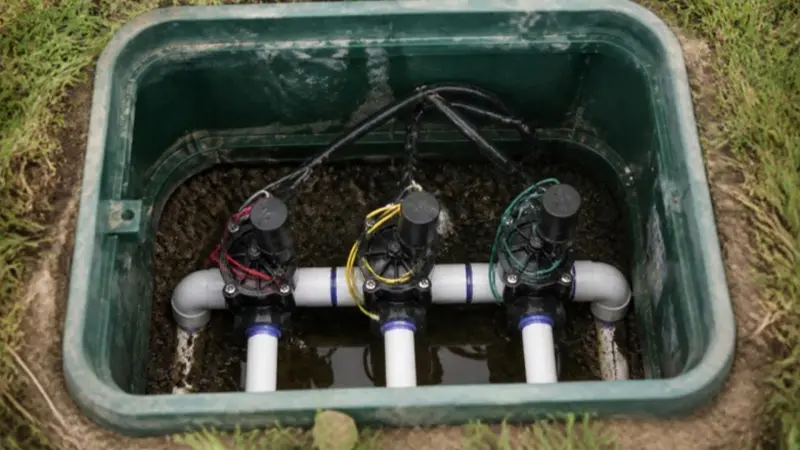
Most residential zone valves use a rubber diaphragm held closed by water pressure. A tiny port lets water bleed through to keep it closed, and the solenoid opens that port when the controller sends 24 volts. If sand, pipe debris or a pebble lodges under the diaphragm, or blocks the port, the valve can't seal. Debris is especially common right after a pipe repair or at spring start-up.
Check that the manual bleed screw or lever on top of the valve is closed. They're sometimes left open after winterization. Beyond that, cleaning or replacing the diaphragm, or replacing the solenoid or the whole valve, requires opening the valve with the water off.
Preventing a Repeat
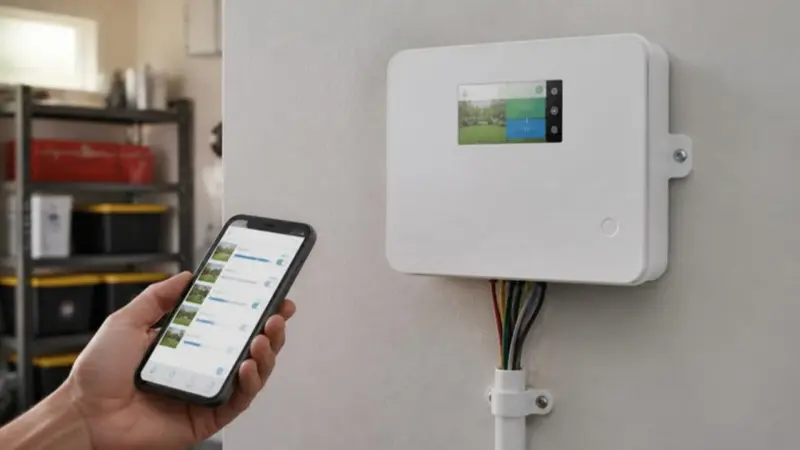
Flushing lines after any pipe repair keeps debris out of the valves. A master valve keeps the mainline depressurized between cycles, so a stuck zone valve can't run all night. A flow sensor on a smart controller can detect water flowing when no zone is scheduled and shut the system down or send an alert. See smart controller and sensor upgrades.
If the stuck valve has already run up your bill, see our guide to high water bills and sprinkler leaks.